Norwegian Prima — The Design Bet Paid Off
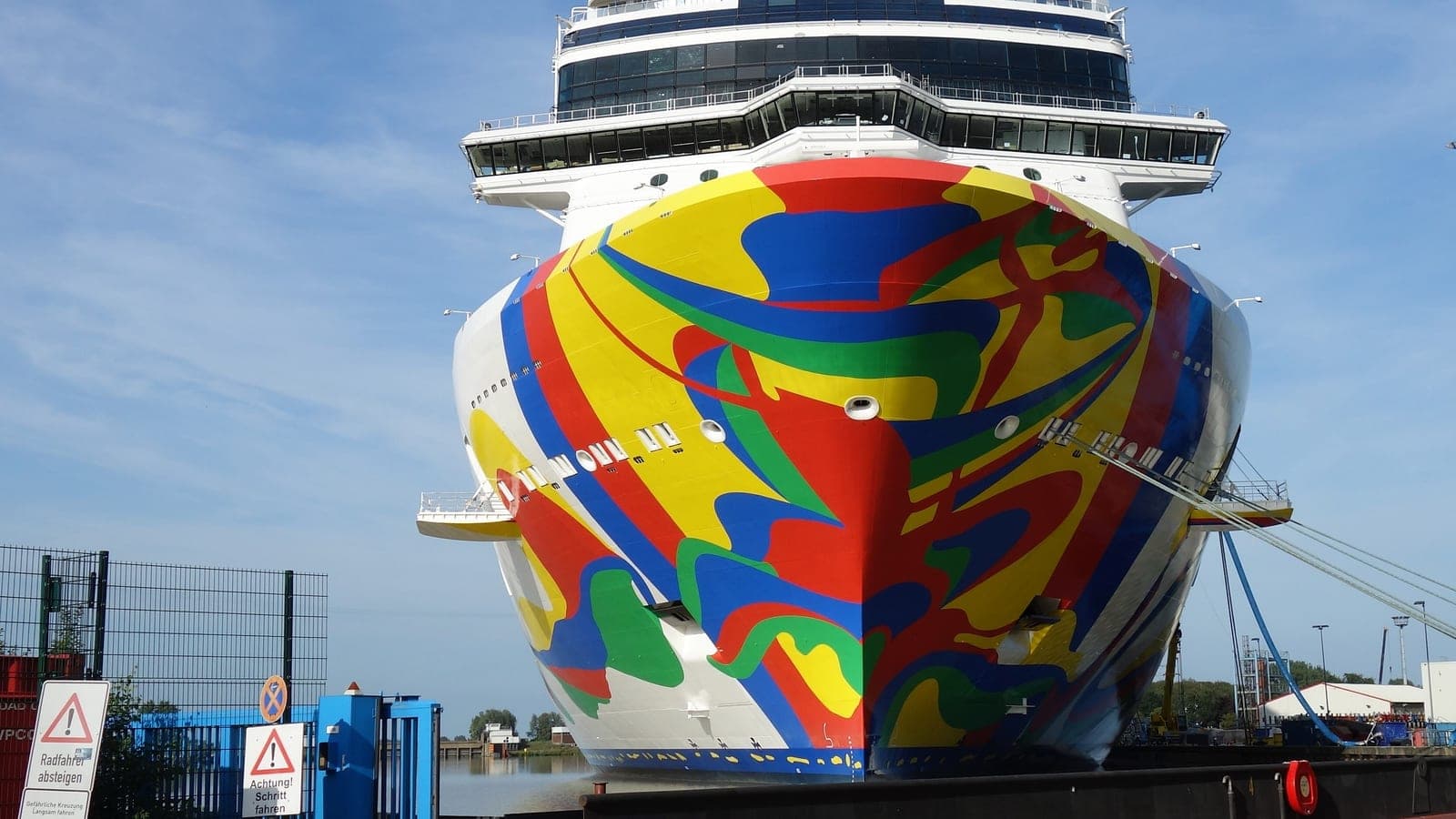
Smaller than the Oasis and Excel megaships and better for it. The Prima is the most design-forward Norwegian build to date.
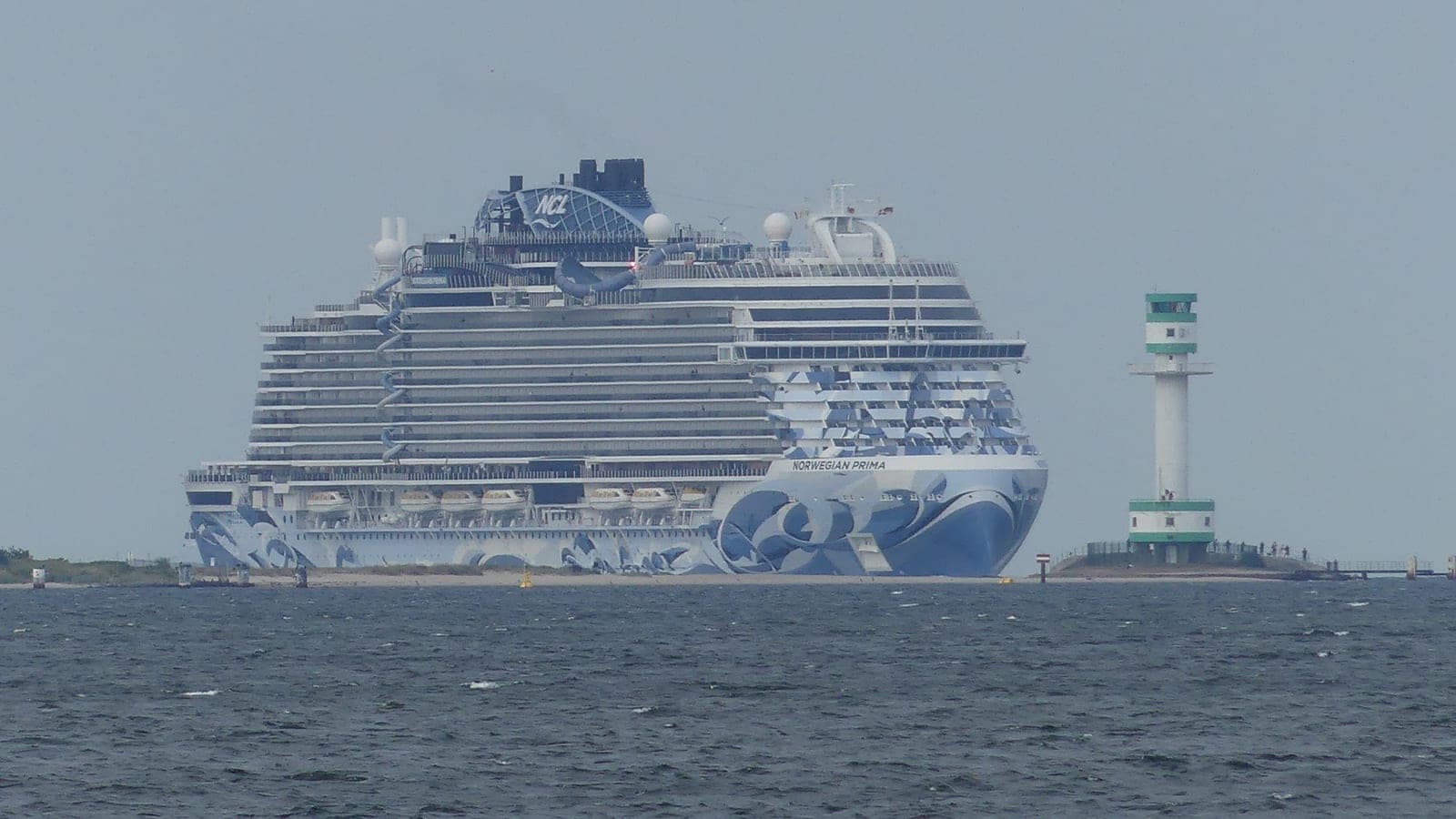
Reviewed across a 7-night Bermuda sailing out of New York in spring 2026, with cabin nights in a Club Balcony Suite, a standard balcony aft, and a Haven Penthouse. The Prima is the first ship in Norwegian Cruise Line's Prima class — a deliberate downsize after the Breakaway Plus generation, with more open deck space per guest than any other ship in the fleet and the line's most ambitious dining lineup to date. The headline finding is that the design bet paid off: the Prima feels like a current, considered, modestly luxurious ship in a way no Norwegian build has felt in over a decade.
The hardware
The Prima is a 142,500 GT, 3,215-passenger ship — meaningfully smaller than Royal Caribbean's Oasis class and Carnival's Excel class. That smaller footprint translates directly to onboard density: the largest open deck space per guest in the Norwegian fleet, three full pool zones (Infinity Beach, the main Oasis Pool, and the Vibe Beach Club adults-only deck), and elevator wait times that almost never break 60 seconds. The ship feels current; nothing about the deck plan feels like it was bolted on.
The bow is occupied by Prima Speedway — a three-deck go-kart track that is the line's signature outdoor attraction — and a tier of glass-fronted observation lounges (Penrose, Indulge Food Hall) that turn the forward views into the most-used spaces on the ship. Aft, Ocean Boulevard wraps the entire perimeter of deck 8 with an outdoor walking path, the largest of any current cruise ship.
Cabins by tier
Cabin tiers, plainly
Norwegian Prima-class cabins are larger across every category than the older Breakaway hulls. Standard balcony cabins run 218 sq ft total — among the largest mainstream balconies at sea. Club Balcony Suites unlock priority embarkation and a private sun deck without the full Haven premium. The Haven is Norwegian's premium-suite product: a private restaurant, private courtyard pool, and butler service that earns its meaningful price premium on long itineraries.
The editorial team reviewed three categories: a Club Balcony Suite (priority embarkation, dedicated lounge access, and a private sun deck — the value pick on this ship), a standard balcony aft on deck 9 (oversized 218 sq ft layout with the wake view), and a Haven Penthouse two-bedroom (the line's premium-suite product, with a private courtyard pool, private restaurant, and butler service). The Haven on Prima-class ships is genuinely the line's strongest premium product and a meaningful step up over the Haven on Breakaway Plus.
Standard interiors are functional rather than memorable. Travelers who sleep in cabin and live elsewhere on the ship can comfortably book the cheapest interior; everyone else should look one tier up.
Dining program
Norwegian's Freestyle Dining is built for specialty restaurants, and the Prima leans into that aggressively. Palomar (Mediterranean, included with the Specialty Dining Package) is the highlight of the lineup — the lamb shoulder is one of the standout plates in mainstream cruising. Cagney's Steakhouse remains the line's standout steak. Hasuki is a teppanyaki room that does the show without embarrassing itself on the cooking. Onda by Scarpetta is the Italian concept and the most consistent of the lineup.
The Indulge Food Hall on deck 8 is the smartest casual space at sea — eleven counters from ramen to wood-fired pizza to taco to fried chicken, all included, with table service via a phone-app order. It is the dining venue that travelers will spend the most time in across a week, and the one that makes the Prima feel different from the line's older builds.
The main dining rooms (The Commodore Room, Hudson's, The Local) are fine and underused — most travelers eat in the Indulge Food Hall, the specialty venues, or the Haven restaurant. The Editorial recommendation: book the Specialty Dining Package (3-5 nights depending on the bundle), use it on Palomar, Cagney's, and Onda, and use the Indulge Food Hall for the rest.
Entertainment
Entertainment is Norwegian's perennial weak spot and the Prima does not entirely fix it. The headline production show is Summer: The Donna Summer Musical — well-staged but a meaningful step down from the Broadway productions Norwegian booked on the Breakaway-class ships a decade ago. The ship's saving grace on this front is the live music program: Syd Norman's Pour House (the cult-favorite rock-and-roll bar) is the strongest version of the venue in the fleet, and The Improv at Sea lineup is one of the strongest on a non-Carnival ship.
For families and active travelers, the Prima Speedway go-kart track and The Drop dry slide (a 10-deck free-fall on the bow) are unique to this class and book on the app the morning of. Both run a small per-ride charge.
Service
Service across the ship is faster and more attentive than on the older Norwegian fleet. Cabin stewards are visible without being obtrusive, dining-room servers are paced correctly, and the Haven service rises to genuine premium-suite standards — butlers learn guest names by day two and the Haven concierge will route most onboard friction (dining changes, excursion swaps, spa rebooks) without travelers needing to leave the deck.
The gap between standard service and Haven service on Prima-class ships is wider than on most lines. Travelers who can afford the Haven should book it; travelers who cannot should temper expectations toward functional rather than effusive service in standard categories.
Itinerary and value
Prima sails year-round Caribbean, Bermuda, and Trans-Atlantic repositioning seasons, with summer Northern Europe rotations. The Bermuda itinerary out of New York is the strongest single rotation — three nights docked in King's Wharf with full access to the island, plus the line's most efficient onboard programming on the at-sea days.
What it costs, honestly
Standard balcony pricing on a 7-night Bermuda run lands around $159-$219 per person per night. Free at Sea bundle promotions (drinks, Wi-Fi, specialty dining, and shore excursion credit) are layered on top and are genuinely worth the included gratuity surcharge for travelers who would have bought any two of the four bundled add-ons separately. The all-in price after gratuities (typically $16-$18 per person per night), port taxes (usually 18-25% of the base fare), and a two-device Wi-Fi package adds 35-55% on top of the base fare. Drink packages start at roughly $65-$85 per person per day before service charge — the math works for travelers averaging 5-7 alcoholic drinks per day and not before. Specialty dining covers run $35-$65 per person per restaurant and the better venues book out within the first 48 hours of the booking window — first-night reservations in particular are quiet and easy to land.
For travelers comparing Norwegian's repositioning value play against the rest of the segment, the repositioning cruises deep-value guide covers the math.
Embarkation and disembarkation
Embarkation at the Manhattan Cruise Terminal is the most efficient on the East Coast — a single-floor layout, generous boarding-window timing, and a Norwegian app that issues a precise 30-minute slot. Plan on 25-40 minutes from curb to ship even on a peak Saturday. Travelers driving in pay $42 per night for the on-site garage; the alternative pay-and-shuttle lots in West New York (NJ) run $25 per night with a 15-minute shuttle.
Disembarkation is similarly clean. Walk-off begins at 7:15 a.m., color-coded zones run on schedule, and the cab line at the Hudson side flows continuously.
Verdict
Who this ship is for
Recommended for: design-conscious cruisers, food-focused travelers, Haven suite guests (the headline product on this class), and Bermuda travelers who want a clean three-day port stop bracketed by a relaxed at-sea ship. It is a poor pick for travelers who want a quiet, low-density seascape week, who plan to spend afternoons reading uninterrupted on a balcony, or who are sensitive to crowd density on the main pool deck during a sea day. A smaller premium-segment ship — typically a Celebrity Edge-class or a luxury operator — is the better answer in those cases.
Not recommended for: travelers shopping purely on headline cabin price (Norwegian's gratuity, beverage-package, and specialty-dining add-ons compress the apparent fare advantage by the time the final invoice arrives), travelers who treat the production-show lineup as the single most important onboard amenity, and travelers booking standard interior cabins on Caribbean rotations where the Breakaway-class hardware delivers nearly the same passenger experience for a meaningful discount on a per-night basis.
The Prima is the right Norwegian ship to book when the priority is a current, well-designed mainstream-premium product with the line's strongest dining lineup and the strongest Haven suite implementation in the fleet. It is the wrong Norwegian ship to book when the priority is the largest possible toy chest of onboard activities — the Breakaway Plus and the upcoming Aqua-class ships carry more headline attractions on a per-ship basis, even if the Prima carries a more refined version of fewer of them.
How this ship was reviewed
My Cruise Checklist reviews are written by editorial staff who book and sail every reviewed ship at standard public rates. The editorial team does not accept hosted media sailings, comped cabin upgrades, or revenue-share arrangements with cruise lines or travel agencies. Cabin nights are rotated across at least two distinct categories on every reviewed ship — typically a mid-tier balcony plus either a standard interior or a premium-suite category — so the review reflects more than a single price tier. Where a ship offers a meaningful ship-within-a-ship product (Royal Caribbean Suite Neighborhood, Norwegian Haven, MSC Yacht Club, Disney Concierge, Celebrity Retreat), the editorial team books at least one night in that category to allow a credible side-by-side read against the standard-cabin experience.
Numeric scores are assigned across seven dimensions (overall, dining, cabins, entertainment, value, service, itinerary) on a 1.0 to 5.0 scale, with one decimal of precision. A score of 4.0 means the dimension materially exceeds mainstream-segment expectations; a 3.0 is competent and unremarkable; anything below 3.0 is flagged as a concern in the body copy. Scores are anchored to the ship's segment (mainstream, premium, or luxury) rather than the entire industry, so a 4.5 on Carnival is not directly comparable to a 4.5 on Seabourn. Dining and entertainment scores are weighted toward the venues a typical traveler will actually use across a sailing week rather than the single most expensive specialty restaurant or the headline production show in isolation.
Reviews are revisited and republished on a rolling 18-to-24-month cadence, or sooner when a ship goes through a major dry-dock refurbishment, a class-wide menu reset, or a meaningful change in itinerary deployment. Travelers are encouraged to cross-check the published date at the top of every review against the current sailing date before relying on specific pricing or venue references. Reader-submitted corrections are reviewed by the editorial team within a week and, when verified, applied with an updated published date and a short changelog note at the foot of the article.
Related reading
Get the next ship review in your inbox.
One email per week with our latest cruise reviews and planning guides. No spam, no affiliate pitches, unsubscribe any time.