Icon of the Seas — Yes, the Largest Ship Actually Works
Sensory overload would be the natural expectation. Instead, Royal Caribbean's neighborhood concept genuinely delivers a 7,600-passenger ship that doesn't feel like one.
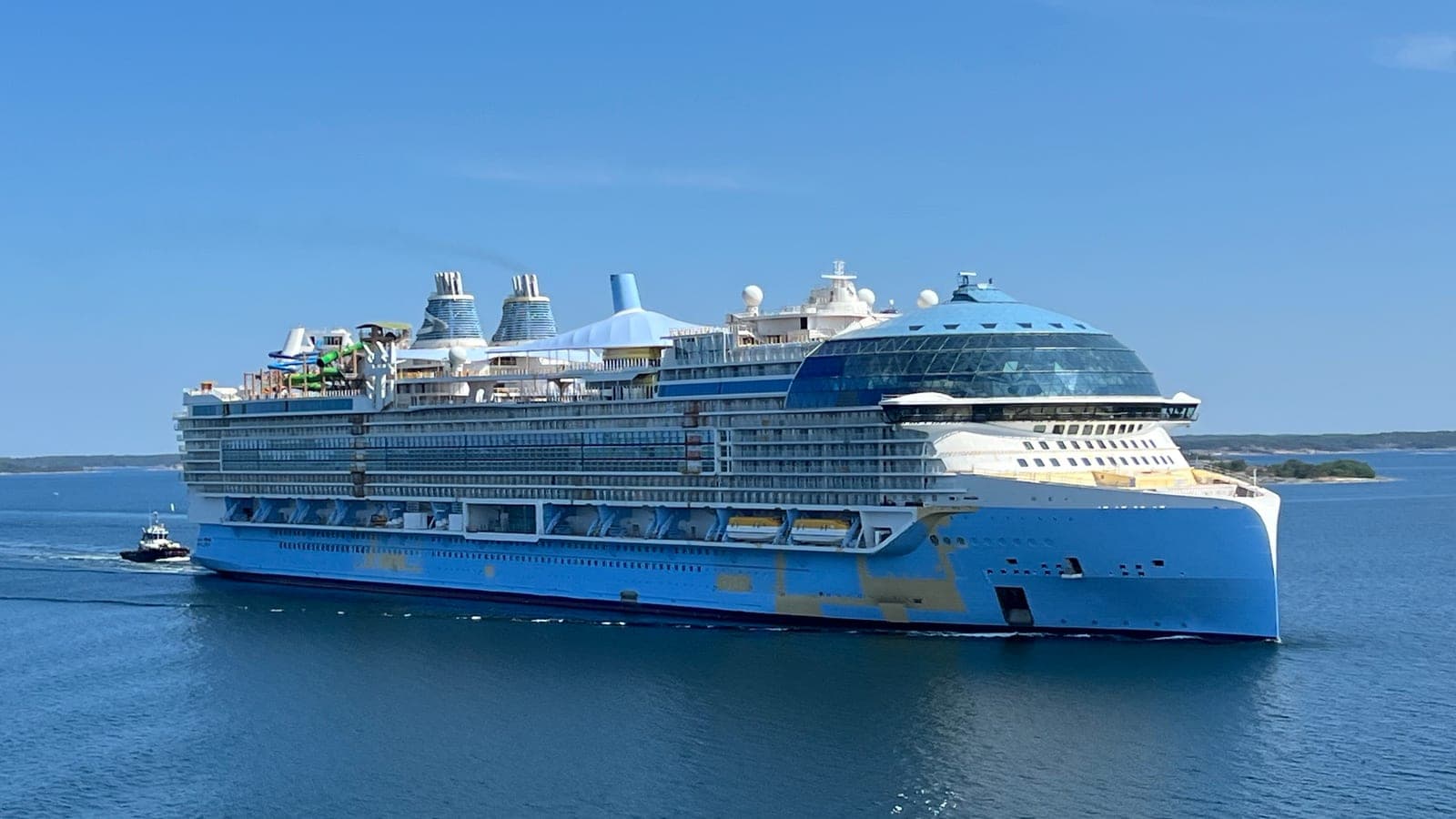
Reviewed across two consecutive 7-night Eastern and Western Caribbean sailings out of Miami in early 2026, with cabin nights in a Central Park balcony, a Surfside Family view room, and a Sky Junior Suite in the new Suite Neighborhood. Icon of the Seas is the largest cruise ship ever built and the ship that any honest editorial outfit has to grapple with on its own terms. The headline finding: the neighborhood concept works. A 7,600-passenger ship that, on a sea-day afternoon, feels less crowded than a 4,000-passenger Voyager-class hull is a genuine engineering and operational achievement. The ceiling — what travelers actually get — is the highest in mainstream cruising. The floor is low only in two specific places: standard-tier dining service and embarkation in Miami on a turnaround Saturday.
The size question
Icon of the Seas can carry 7,600 passengers at full occupancy. The number is genuinely shocking until the ship's design clicks into focus: it is built around eight distinct neighborhoods — Central Park, Surfside, AquaDome, the Hideaway, the Suite Neighborhood, Royal Promenade, Chill Island, and Thrill Island. Each functions as its own cruise ship, with its own dining clusters, its own bars, and (in most cases) its own pool. Travelers who never wander beyond Central Park and the Suite Neighborhood will experience a different ship than travelers who live on Thrill Island and the Royal Promenade. Both are valid weeks.
Wait times for sit-down restaurants stayed under 10 minutes outside peak embarkation lunch. The elevators are smartly distributed and almost always have a free car within 30 seconds. The spaces that absolutely will be crowded — the main pool deck on a sea day, the Wonderland brunch on debarkation day, the Category 6 waterpark from 11 a.m. to 2 p.m. — are the predictable ones, and easily routed around with even modest planning.
The waterpark and AquaDome
Category 6, the largest waterpark at sea, lives up to its name. The Frightening Bolt slide — the steepest drop slide in the industry — is genuinely intimidating. Lines are longest from 11 a.m. to 2 p.m.; first thing in the morning is empty, and the slides reopen post-dinner on most evenings to almost no waits. Travelers who care about hitting every slide should target morning of day two and the dinner-hour reopening of day five.
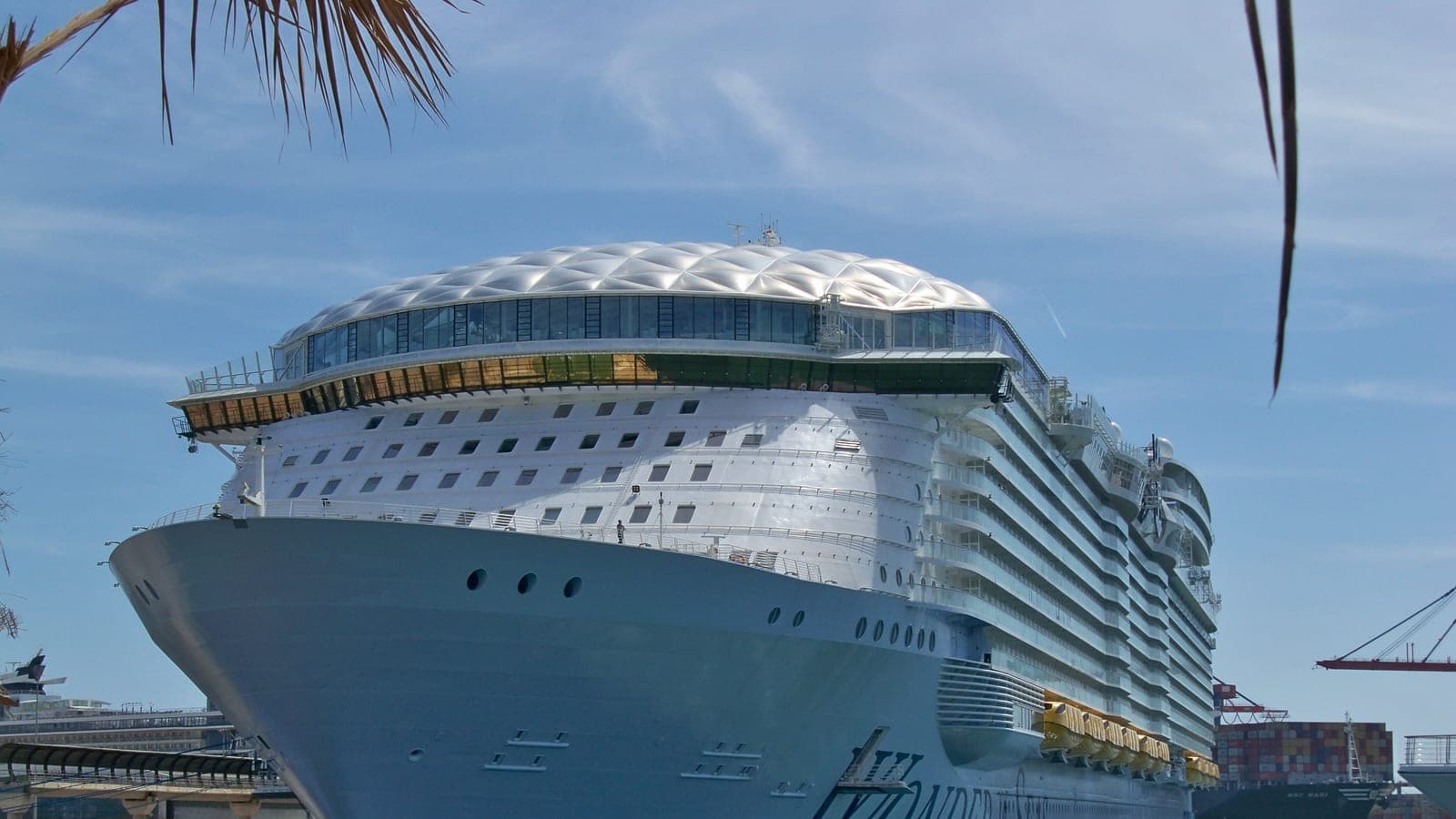
The AquaDome at the bow is the single strongest new design choice on a cruise ship in years. A four-story glass dome over an aerial-show theater that doubles as a quiet observation lounge by day and a cabaret venue at night. The aerial production (currently Aqua Action) runs four nights a week and is a must-attend; Royal has not had a show this strong since Mamma Mia on Allure of the Seas.
Cabins by tier
Cabin tiers, plainly
Interior cabins start at 153 sq ft and skew tight; the Surfside Family view rooms in the family neighborhood are a meaningfully better pick for travelers with kids and only run a small premium. Central Park balcony cabins look down into the open-air park — quiet by mainstream-cruising standards and a strong choice for couples. The new Suite Neighborhood (Sky Junior Suite and above) unlocks Coastal Kitchen 2.0, a private sun deck, and concierge service, and is the single strongest premium-suite product Royal Caribbean has built.
The editorial team reviewed three categories: a Central Park balcony on deck 11 (quiet, plant-shaded, with a real-tree outlook that meaningfully changes the cabin's feel), a Surfside Family view room (the family-neighborhood sweet spot for a family of four with kids 8 and under — split bath, day-bed nook, and a 6-minute walk to the kids' splash zone), and a Sky Junior Suite in the new Suite Neighborhood (Coastal Kitchen 2.0 access, a private sun deck, and a noticeably faster room-service turnaround). The Suite Neighborhood category is the most meaningful upgrade Royal Caribbean has made to its premium product in a decade.
Dining program
Specialty dining is consistently strong: 150 Central Park is the standout restaurant on any Royal ship — a five-course chef's menu that holds up against most $90-prix-fixe land-based restaurants — Hooked Seafood remains underrated, and Empire Supper Club is a fully produced dinner-show concept worth the cover for travelers who like the format. Pier 7, the new casual venue overlooking the harbor on debarkation day, is the most Instagrammed lunch on the ship and reasonable for the price.
Main dining room (American Icon, Surf & Stream, Grande) has improved meaningfully over older Royal ships. Service is fast — sometimes too fast — and the menus are tighter and more confident than the Oasis-class baseline. Travelers eating in My Time Dining should book the 7:30 p.m. window; earlier seatings turn the room into a stadium and later seatings hit the closing-kitchen wind-down.
For a deeper read on which nights to skip the main dining room and which specialty spots are worth the cover, see the editorial main dining vs. specialty guide.
Suite class
Royal has finally taken its premium product seriously. The new Suite Neighborhood includes a private restaurant (Coastal Kitchen 2.0), a private sun deck, a dedicated lounge with all-day complimentary food and beverage, and a near-Yacht-Club-quality experience at the Sky Junior Suite tier and above. If the budget allows a Sky Junior Suite or higher, it makes the ship feel half its size and is the strongest single upgrade decision available on this class.
The upper-tier Royal Loft Suite and Ultimate Family Townhouse are the line's headline-grabbing categories — the Townhouse in particular, with its private slide and three-story layout, is the most ambitious family suite at sea. They price like a small Mediterranean apartment and book a year out, but they justify their premium for travelers who can use them.
Entertainment lineup
The four headline shows — Aqua Action in the AquaDome, The Wizard of Oz in the main theater (Royal's first full-book musical adaptation in years), the ice show Starburst, and the Studio B AquaTheater diving production Pipe Dream — collectively form the strongest entertainment lineup on any single ship in mainstream cruising. The challenge is scheduling: at full occupancy, popular shows fill 30 minutes before curtain even with reservations. The app's booking flow opens 90 days before sailing and travelers who book all four headline reservations on day one will have an easier week than those who try to walk on.
Live music venues are deeper than older Royal ships. Boleros (Latin), Schooner Bar (piano sing-along), and the Lou's Jazz n' Blues are all credible nightly venues. Dueling Pianos in the Royal Promenade is the most fun late-night room on the ship.
Service
Service in the suite class and specialty restaurants is the polish travelers will recognize from premium-segment lines. Service in the standard-tier main dining rooms is fast and accurate but rarely warm — the volume is simply too high for the table-side attention that older Royal ships managed. Cabin stewards, by contrast, are excellent across the ship and a step up from the Oasis-class baseline; the once-a-day turndown is genuinely a turndown rather than a quick freshen.
The staff-to-passenger ratio at full occupancy is necessarily thin. Travelers who value polished service over hardware should prioritize Celebrity Edge-class or a true premium operator — the Celebrity Ascent review covers the closest comparable in this segment.
Itinerary and ports
Icon sails 7-night Eastern and Western Caribbean rotations from Miami, both anchored by Perfect Day at CocoCay — Royal Caribbean's private island and the strongest port day of either week. The Eastern itinerary covers St. Maarten, St. Thomas, and Coco Cay; the Western covers Roatán, Costa Maya, and Cozumel. Travelers comparing the two should bias toward Eastern in winter (calmer Atlantic) and Western in summer (less hurricane risk on the Atlantic side).
Travelers planning shore excursions should read the Caribbean port rankings and the book-with-the-line-or-independently breakdown before booking through the cruise line by default.
Value math
What it costs, honestly
Icon of the Seas typically prices at $179-$249 per person per night for an interior on a 7-night Eastern Caribbean — meaningfully above Carnival but in line with Disney and Norwegian on similar dates. The all-in price after gratuities (typically $16-$18 per person per night), port taxes (usually 18-25% of the base fare), and a two-device Wi-Fi package adds 35-55% on top of the base fare. Drink packages start at roughly $65-$85 per person per day before service charge — the math works for travelers averaging 5-7 alcoholic drinks per day and not before. Specialty dining covers run $35-$65 per person per restaurant and the better venues book out within the first 48 hours of the booking window — first-night reservations in particular are quiet and easy to land.
A realistic all-in spend for a couple in a Central Park balcony with the Deluxe Beverage Package, two specialty dinners, the two-device Surf + Stream Wi-Fi, and pre-paid gratuities lands around $4,200-$4,800 for the week. The Suite Neighborhood lands around $9,000-$12,000 for the same week and includes most of the extras.
Embarkation and disembarkation
Getting to the ship
PortMiami runs three cruise terminals deep, and the line ships from terminal D tend to clear security fastest. Travelers driving in from out of state should target an arrival window between 11 a.m. and 12:30 p.m. — earlier creates a 90-minute wait in the boarding hall, later runs into the lunch peak. The on-site garage runs about $24 per night and books out on Saturdays. Lyft and Uber pickups stage at the curb opposite each terminal.
Icon embarks at the new Royal Caribbean Terminal A — a purpose-built three-floor facility that handles the volume better than the older Miami terminals. Even so, peak Saturday boarding runs 60-90 minutes from curb to ship for non-suite travelers. Sky Class and above board through a separate lane that holds at roughly 15 minutes.
Verdict
Who this ship is for
Recommended for: families, first-timers wowed by spectacle, suite-class travelers who want a near-luxury bubble inside a megaship, and any traveler who actively enjoys a high-density, high-amenity ship. It is a poor pick for travelers who want a quiet, low-density seascape week, who plan to spend afternoons reading uninterrupted on a balcony, or who are sensitive to crowd density on the main pool deck during a sea day. A smaller premium-segment ship — typically a Celebrity Edge-class or a luxury operator — is the better answer in those cases.
How this ship was reviewed
My Cruise Checklist reviews are written by editorial staff who book and sail every reviewed ship at standard public rates. The editorial team does not accept hosted media sailings, comped cabin upgrades, or revenue-share arrangements with cruise lines or travel agencies. Cabin nights are rotated across at least two distinct categories on every reviewed ship — typically a mid-tier balcony plus either a standard interior or a premium-suite category — so the review reflects more than a single price tier. Where a ship offers a meaningful ship-within-a-ship product (Royal Caribbean Suite Neighborhood, Norwegian Haven, MSC Yacht Club, Disney Concierge, Celebrity Retreat), the editorial team books at least one night in that category to allow a credible side-by-side read against the standard-cabin experience.
Numeric scores are assigned across seven dimensions (overall, dining, cabins, entertainment, value, service, itinerary) on a 1.0 to 5.0 scale, with one decimal of precision. A score of 4.0 means the dimension materially exceeds mainstream-segment expectations; a 3.0 is competent and unremarkable; anything below 3.0 is flagged as a concern in the body copy. Scores are anchored to the ship's segment (mainstream, premium, or luxury) rather than the entire industry, so a 4.5 on Carnival is not directly comparable to a 4.5 on Seabourn. Dining and entertainment scores are weighted toward the venues a typical traveler will actually use across a sailing week rather than the single most expensive specialty restaurant or the headline production show in isolation.
Reviews are revisited and republished on a rolling 18-to-24-month cadence, or sooner when a ship goes through a major dry-dock refurbishment, a class-wide menu reset, or a meaningful change in itinerary deployment. Travelers are encouraged to cross-check the published date at the top of every review against the current sailing date before relying on specific pricing or venue references. Reader-submitted corrections are reviewed by the editorial team within a week and, when verified, applied with an updated published date and a short changelog note at the foot of the article.
Related reading
Get the next ship review in your inbox.
One email per week with our latest cruise reviews and planning guides. No spam, no affiliate pitches, unsubscribe any time.